
Save 4%

Greene County Fertilizer
0-0-1 RGS/ 0-0-5 Air-8 Combo | Five Gallon | N-Ext
$122.99$127.99
Every Yard Mastery lawn fertilizer in one place, built for DIYers on cool- and warm-season grass. Pick granular lawn fertilizers if you like a spreader and a long feed. Pick liquid lawn fertilizers if you want to spray fast-acting nutrition and bio-stimulants from a hose-end or backpack sprayer.
Not sure which product or when? The free Yard Mastery App uses your grass type and soil temps to tell you what to apply and when.
Greene County Fertilizer

Greene County Fertilizer

Greene County Fertilizer

Greene County Fertilizer

Greene County Fertilizer

Greene County Fertilizer

Greene County Fertilizer

Greene County Fertilizer

Greene County Fertilizer

Greene County Fertilizer

Greene County Fertilizer
No products match your filters.
Granular goes down with a spreader and feeds over weeks. Most of the blends here use 3 lbs per 1,000 sq ft, and an 18 lb bag covers up to 6,000 sq ft. Water it in within 48 hours. Liquid is sprayed, works quickly through the leaf and soil, and is easy to tank-mix with bio-stimulants or iron. Plenty of lawns use both: granular as the base feed, liquid to adjust color and stress in between.
→ Shop granular lawn fertilizers · Shop liquid lawn fertilizers
| Your goal | Start here | Why |
|---|---|---|
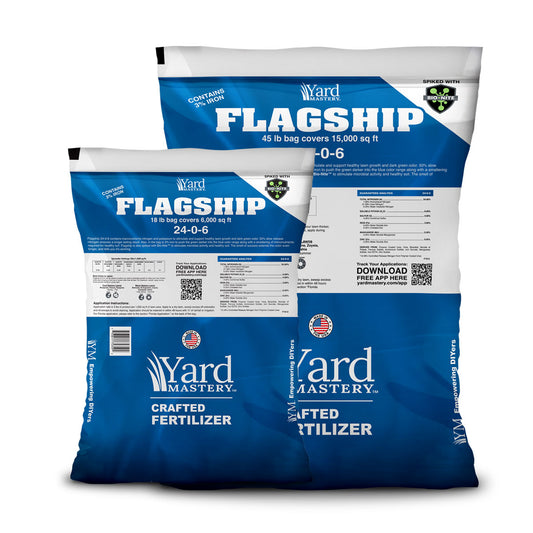
| Thicker, greener growth (all-around feed) | 24-0-6 Flagship (granular) | Quick- and slow-release nitrogen, 3% iron, micronutrients (manganese and zinc on the label) and Bio-Nite™. Apply at 3 lbs per 1,000 sq ft. |
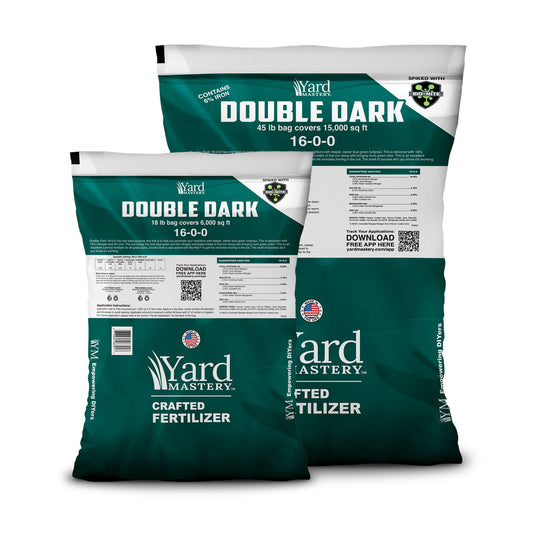
| Dark color without surge growth | 16-0-0 Double Dark (granular) | 6% iron, 16% nitrogen (25% slow-release), Bio-Nite™. |
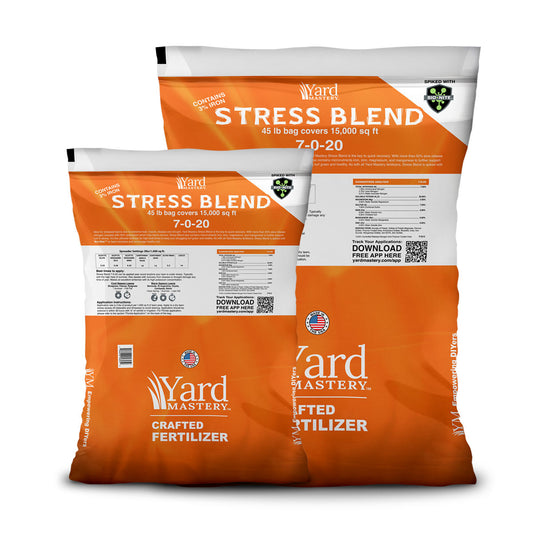
| Heat, drought and stress, or putting warm-season grass to bed | 7-0-20 Stress Blend or 5-0-15 Life Support (granular) | Stress Blend: 20% potassium, 50% slow-release N, 3% iron, Bio-Nite™. Life Support: Natural-based, 15% potassium from SOP, plus humic acid, kelp, and hydrolysates. |
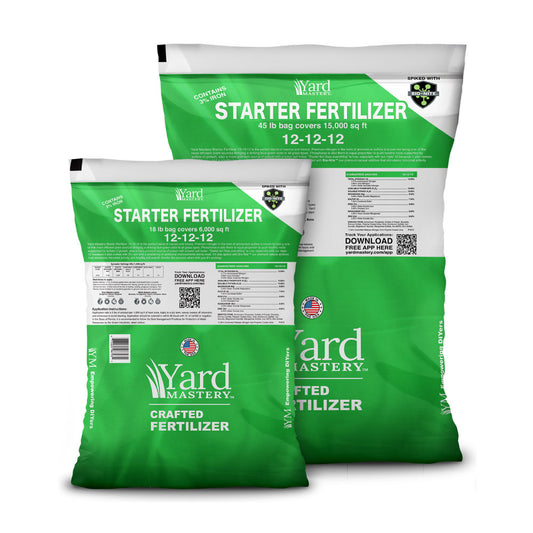
| Seeding or sodding | 12-12-12 Starter (granular) | Balanced N-P-K with 12% phosphorus for roots, 3% iron, Bio-Nite™. |
| Natural-based feed and soil building | 20-0-2 Derby Green or 8-0-3 Soil Fit (granular) | Feather meal, soybean meal and wheat flour, plus kelp and protein hydrolysates. Both are non-staining. Note: Soil Fit makes a great granular bio-stimulant option. |
| Spray-on nitrogen | 26-0-0 GreeneCharge or 28-0-0 N-Charge (liquid) | GreeneCharge: controlled-release N plus micros, color for up to 8 weeks. N-Charge: immediately available N; fall “nitrogen blitz” product. |
| Potassium without growth | 0-0-25 GreeneKick (liquid) | 100% soluble potassium with no nitrogen. Use it when a soil test shows low K or the lawn is under stress. |
| Soil and roots (pair with any fertilizer) | Bio-Stimulants (Air-8, RGS, Humic12, Compaction Cure, Spoon Juice) | Supports the soil. These are not a primary N source. |
| Don’t know your soil? | Soil test kit | Mail-in lab results with fertilizer and lime recommendations. |
Cool-season lawns (bluegrass, tall fescue, ryegrass): Feed during peak growth in spring and fall using high-nitrogen formulas like 24-0-6 Flagship and 20-0-2 Derby Green. Transition to 7-0-20 Stress Blend or 5-0-15 Life Support during summer heat and drought to sustain nutrients without stressing your turf. Finish the season strong by applying a late-fall winterizer fertilizer—such as 24-0-6 Flagship—before the ground freezes for an early spring green-up.
Warm-season lawns (Bermuda, St. Augustine, zoysia, centipede, Bahia): Feed warm-season grass during its peak summer growth using high-nitrogen formulas like 24-0-6 Flagship or 20-0-2 Derby Green. In spring and fall, when growth slows, transition to 7-0-20 Stress Blend or 5-0-15 Life Support to keep feeding your lawn while helping it handle stress. Finish the season strong by applying 7-0-20 Stress Blend or 5-0-15 Life Support as your winterizer fertilizer after the final mow.
Don’t forget pre-emergent: Apply pre-emergent twice in the spring when soil temperatures are 50-55°F and again when they are 65-70°F and once in the fall when soil temps drop to 70°F (if you are not seeding). → Shop pre-emergents
It depends on your grass type and personal soil temperatures. For cool-season lawns like bluegrass, fescue, and ryegrass, use 24-0-6 Flagship in spring and fall, when growth peaks, then switch to 7-0-20 Stress Blend in summer to help the grass handle heat stress. Warm-season lawns like Bermuda, zoysia, St. Augustine, and centipede follow the opposite pattern: use 7-0-20 Stress Blend in spring and fall, and 24-0-6 Flagship in summer, when they grow most. If you’re seeding or overseeding, Starter Fertilizer helps new grass establish strong roots. If you want deep green color without extra growth, choose Double Dark. For a recommendation tailored to your lawn, start with a Yard Mastery Soil Test to see exactly what your soil needs.
Neither is better. It mostly depends on whether you prefer a spreader or a sprayer. Granular fertilizer is easy to apply with a spreader. Liquid fertilizer can often be mixed with bio-stimulants like Spoon Juice or Compaction Cure for one easy application. Many homeowners use granular as the foundation of their lawn care program and liquid to fine-tune.
Most Yard Mastery granular blends go down at 3 lbs per 1,000 sq ft, so an 18 lb bag covers up to 6,000 sq ft and a 45 lb bag up to 15,000 sq ft. Liquid rates vary by product, so follow each label.
It’s a biosolid organic material in Flagship, Double Dark, Stress Blend, and Starter. It feeds beneficial soil microbes.
Yes, for granular: water in within 48 hours with at least 1/4" of irrigation or rain, and sweep granules off hard surfaces to avoid staining. For liquids, follow each individual label’s watering instructions.
Not sure what to put down this fall?
The free Yard Mastery App builds a plan from your grass type, zip code and soil temps, including which fertilizer to use and when.
Thanks for subscribing!
This email has been registered!