
Bermuda Grass Care: The Complete Lawn Workout Plan
Caring for bermuda grass comes down to three fundamentals: mow it low and often, water it deep and infrequent, and feed it nitrogen on a consistent schedule. Get those three things right and bermuda will reward you with a lawn so thick and dense it chokes out weeds on its own — no chemicals required. Think of it as a workout plan for your lawn. Stick to the program and the gains show up fast.
Mowing Bermuda Grass: Low and Often Wins
Bermuda grass is aggressive. It spreads through above-ground runners called stolons and underground runners called rhizomes, creeping across the soil and weaving together into a tight, dense mat of turfgrass. That density is your best defense against weeds — and the way you unlock it is with a consistent, low mowing routine.
What Height to Mow Bermuda Grass
Mow bermuda grass at 1 inch or lower. Here is why that matters: bermuda grows like a pine tree. When you let it get tall, it develops long brown stems — runners and vertical shoots — and keeps all the green at the very top. The result is a thin, leggy lawn that looks brown at the base and sparse across the top.
When you mow low — around 1 inch — you remove those brown stems entirely. The grass stays green all the way through, and more importantly, it redirects energy away from vertical growth and into lateral spread. More lateral spread means more rhizomes and stolons filling in thin spots. More fill means a thicker lawn. Thicker lawn means fewer weeds. It is a chain reaction that starts with your mowing height.
How Often to Mow Bermuda Grass
Mow bermuda grass twice per week during the growing season. Most lawn owners mow once a week on the weekend and call it done. Adding a midweek mow — Wednesday evening is a great habit — is the single biggest change you can make to transform a bermuda lawn. Here is why it works:
- More frequent mowing keeps the grass from going leggy between cuts.
- Each low cut puts the lawn's energy back into lateral growth.
- The density gains from twice-a-week mowing are visible within 6 weeks.
Think of it as cardio in your workout plan. You would not expect to get fit running once a week. Same principle applies here. Learn to enjoy getting home from work and mowing in the cool evening while the sun sets — that midweek mow is quality time in the lawn, and your bermuda will show you the results.
Why Mowing Low Makes Bermuda Grass Thicker
When bermuda is cut low and cut often, the plant's growth response is to push outward rather than upward. The rhizomes and stolons creep across the ground in every direction, filling bare spots and overlapping with one another. Over time they weave together into a stand of turf dense enough to physically crowd out weeds — no herbicide required. Dense bermuda is the goal. Low, frequent mowing is the fastest path to it.
Watch this video for illustrated examples of how mowing height affects bermuda grass growth.
Watering Bermuda Grass: The Deep and Infrequent Method
Bermuda grass is built for heat. It thrives during long, hot periods — but only if it stays hydrated. The mistake most homeowners make is watering too often for too short a duration. A little water every day does not build a deep root system. Deep, infrequent watering does.
How Much Water Does Bermuda Grass Need?
Bermuda grass needs a minimum of 1.5 inches of water per week. Deliver that in three waterings spaced roughly a day apart — about every other day — at ½ inch per session. This is called deep and infrequent irrigation, and it is the standard used by agronomists and lawn care professionals for good reason.
When you water deep, moisture soaks down into the root zone rather than pooling at the surface. Roots follow the water — deep water means deep roots. Deep roots mean a lawn that handles heat and short dry spells without going dormant.
The most common watering mistake sounds like this: "I run my zones for 15 minutes every day." That tells you nothing useful. The only number that matters is inches per session — not minutes on a timer. When the weatherman describes a rainstorm, he says "we got 2 inches of rain" — not "it rained for 20 minutes." Depth is the only meaningful measurement.
How to Calibrate Your Irrigation System
Not sure how much water your system actually delivers? Try the tuna can challenge. Place several empty tuna cans (or identical straight-sided containers) around your yard and run your irrigation system. When the cans hold ½ inch of water, that zone has delivered ½ inch to your lawn. Measure and adjust your run times per zone accordingly.
This works equally well for in-ground irrigation systems and manual hose-end sprinklers. Once you know your output per zone per minute, you can program your controller with confidence. Watch this irrigation calibration walkthrough for a step-by-step demonstration.
Signs Your Bermuda Grass Needs Water
Bermuda grass shows water stress clearly. Watch for these signals before the lawn reaches full dormancy:
- Footprinting: Footprints stay visible in the grass rather than springing back — the lawn is wilting.
- Leaf blade folding: Bermuda leaves fold lengthwise when the plant conserves moisture.
- Blue-gray tint: A dull, slightly grayish color to the canopy is an early dehydration signal.
Catching these signs early and watering promptly prevents full dormancy. A dormant bermuda lawn can recover — but it costs you weeks of growth momentum.
Fertilizing Bermuda Grass for Thickness and Color
Mowing and watering lay the foundation. Fertilizer is what takes your bermuda lawn from adequate to exceptional. Bermuda is a heavy feeder and it responds to nitrogen like few other turfgrasses. Give it a consistent fertilizer program and it will run — thickening, spreading, and deepening in color at a pace that surprises most first-time bermuda owners.
What Kind of Fertilizer Does Bermuda Grass Need?
Bermuda grass is primarily driven by two inputs: sunlight and nitrogen. Nitrogen fuels both of bermuda's most desirable traits: aggressive lateral spread and deep green color. A fertilizer with a high first number (the N in N-P-K) is what you are after.
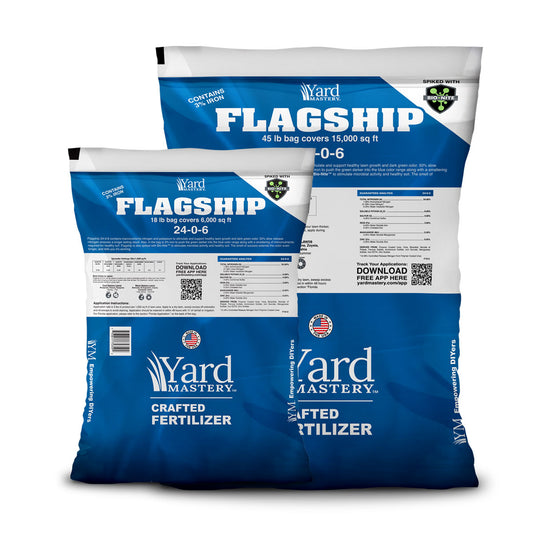
For most bermuda lawns, Flagship 24-0-6 is the go-to choice. The 24% nitrogen content — half of which is slow-release — delivers an immediate green-up and then continues releasing nitrogen for up to 45 days after application. The added iron deepens color without pushing excessive growth, and the formula is designed to not burn the lawn even during hot weather.
If you prefer a more natural approach, Derby Green is an excellent alternative. It uses base natural ingredients paired with potassium and peptides to support bermuda through stress periods — heat, drought, or recovery from heavy traffic. Apply either product every 4 to 6 weeks and watch that bermuda run thicker and greener than you have ever seen it.
How Often to Fertilize Bermuda Grass
Apply fertilizer to bermuda grass every 4 to 6 weeks throughout the active growing season. Bermuda consumes nutrients at a rate that outpaces most cool-season grasses, and it shows when feeding gets inconsistent — growth slows, color fades, and thin areas stop filling in.
Consistency matters more than any single application. This is the meal plan portion of the workout program. Skip meals and the gains stall. Stay on schedule and the results compound week over week.
Fertilizer, Runners, and Weed Control: The Connection
The rhizomes and stolons that make bermuda spread need two things to run: sunlight and nitrogen. You cannot control the sunlight, but you control the nitrogen. A well-fed bermuda lawn produces more runners. Those runners fill thin spots faster. The resulting mat of turf becomes dense enough to physically block weed seed germination at the soil surface — because most weeds need light to sprout and a tight bermuda canopy blocks that light. That is the organic weed control story that most lawn owners miss, and it starts with a consistent fertilizer program.
Putting It All Together: The Bermuda Grass Workout Plan
Here is the full program in plain terms. Not every lawn owner can execute every step every week — and that is fine. Do more than you did last season and progress accumulates. The goal is incremental improvement. Set the bar at perfection so that when you inevitably fall short, you are still better than you were before.
| Category | Target | Notes |
|---|---|---|
| Mowing | Twice per week at 1" or lower | Weekend + midweek mow; use a sharp blade to avoid tearing |
| Watering | 1.5" per week in 3 sessions | ½" every other day; calibrate output with the tuna can method |
| Fertilizing | Every 4–6 weeks during active growth | Flagship 24-0-6 or Derby Green |
Mow it often. Water it right. Feed that beast. Your lawn will be jacked in no time.
Frequently Asked Questions
How do I make bermuda grass thicker?
The fastest way to thicken bermuda grass is to mow it low — at or below 1 inch — twice per week, and fertilize with a nitrogen-rich product every 4 to 6 weeks. Low, frequent mowing forces the plant to redirect energy into lateral spread via rhizomes and stolons rather than upward growth. Combined with consistent nitrogen feeding, those runners multiply quickly and weave together into a dense mat of turf. Most lawns see noticeable thickening within 6 weeks of running this routine consistently.
What is the best mowing height for bermuda grass?
The best mowing height for bermuda grass is between ¾ inch and 1½ inches, with 1 inch being the ideal target for most home lawns. Mowing at this height removes the brown stems that develop when bermuda grows tall, keeps the canopy uniformly green, and encourages lateral growth. Golf course bermuda is cut as low as ⅜ inch, but 1 inch is achievable and highly effective for residential lawns.
How often should I water bermuda grass?
Water bermuda grass three times per week, delivering ½ inch per session — roughly every other day. This totals 1.5 inches per week and follows the deep and infrequent irrigation method. Deep watering encourages roots to grow downward rather than staying shallow, which dramatically improves the lawn's ability to handle heat and short dry periods without going dormant.
When should I fertilize bermuda grass?
Fertilize bermuda grass every 4 to 6 weeks throughout the active growing season — starting when the lawn shows active growth after greening up, and continuing through the late growing season before dormancy sets in. Do not fertilize dormant bermuda grass. The lawn cannot use the nutrients while dormant, and unused nitrogen can encourage weed growth or be lost to runoff.
Does bermuda grass need a lot of fertilizer?
Yes — bermuda grass is one of the heaviest nitrogen feeders among common warm-season turfgrasses. It responds strongly to consistent feeding, producing faster lateral spread, denser turf coverage, and deeper green color. Underfed bermuda grows slowly, stays thin, and loses the competitive edge over weeds that makes it such a valuable turfgrass in the first place.
Why does my bermuda grass look brown at the base?
Brown at the base is a sign the grass has grown too tall between mowings. When bermuda gets tall, it develops long stems that turn brown while keeping green leaf blades only at the very top — a leggy, thin appearance. The fix is to mow lower and more frequently. After a few cutting cycles at the correct height, the brown base disappears and the lawn returns to a uniform green canopy.
Can bermuda grass choke out weeds on its own?
Yes — a dense, well-maintained bermuda lawn is one of the most effective natural weed suppressants available. Bermuda's aggressive spreading habit, combined with consistent mowing and nitrogen feeding, produces a turf mat thick enough to physically block weed seed germination. Most weed seeds need light to germinate at the soil surface. A tight bermuda canopy blocks that light. This is why lawn care professionals treat density as the best weed control strategy: it reduces or eliminates the need for broadleaf herbicides in a healthy bermuda lawn.