
Lawn Care During Drought and Watering Restrictions: A Warm-Season Grass Survival Guide
If you're managing a warm-season lawn — St. Augustine, Zoysia, or Bahia — during a dry stretch with county or city watering restrictions in place, you're fighting on two fronts at once: too little water falling from the sky and strict limits on what you can apply. The good news is that with the right strategy, you can keep your lawn alive, hold your weed pressure down, and set it up to bounce back fast once the rains return.
This guide covers everything: how to maximize every drop you're allowed to apply, how to use your irrigation system's test-and-tune provision legally, whether to keep fertilizing, and how a wetting agent like Moisture Max can stretch your water budget further than you'd expect.
Why Warm-Season Grass Struggles in Drought
St. Augustine, Zoysia, and Bahia are warm-season grasses built for heat — but "heat tolerant" doesn't mean "drought proof." When consistent rainfall disappears and the sun stays strong, these grasses move into survival mode: growth slows, color fades toward a blue-gray tint, leaf blades roll inward to reduce moisture loss, and root activity scales back.
The challenge is that watering restrictions often hit at exactly the moment the lawn needs water most. When you're limited to one day per week — and the rest of the week is hot and dry — every decision about that single watering day matters enormously.
The goal isn't just to keep the grass green. It's to keep the root system healthy so the lawn can recover quickly once drought conditions ease. A lawn that was maintained through a dry stretch, even if it looked rough, will come roaring back. One that was neglected will have weeds filling in before the grass can recover.
How to Maximize Your Allowed Watering Day
When restrictions limit you to one watering day per week, the math changes. The standard recommendation for warm-season lawns is 1 to 1.5 inches of water per week, distributed across three sessions. Under restrictions, you need to deliver the same total volume in one day.
Start with the tuna can test if you haven't done it yet. Place empty tuna cans or rain gauges in different irrigation zones and run each zone until you know exactly how many minutes it takes to put down 0.5 inches of water. Without this baseline, you're guessing — and guessing usually means either under-watering or wasting your allowance.
Once you have that data:
- Target at least 1 inch on your allowed day. If your zone needs 20 minutes to deliver 0.5 inches, run it for 40 minutes.
- If your system and schedule allow, target 1.5 inches total — this gives the lawn a full week's worth in one session.
- Prioritize sun-exposed zones and thin or stressed areas first. If you run out of allowable hours, let the shadier or healthier zones run shorter.
The Split-Watering Strategy
Running one long, continuous irrigation cycle sounds efficient, but it often causes runoff — especially on compacted or sandy soils — before the water has a chance to penetrate. A better approach, when your restriction window allows it, is to split your watering into two applications on the same day.
Here's how it works:
- First run: Apply 1 inch at the beginning of your allowed watering window.
- Second run: Apply another 0.5 inches a few hours later, toward the end of the window.
The gap between applications gives the soil time to absorb the first round. The second run pushes water deeper into the root zone and catches any areas the first cycle missed. The total — 1.5 inches — matches the full weekly recommendation, even though it all lands in one day.
If your system can only run once, still target the full inch. One deep watering is better than two shallow ones.
What About Watering Time of Day?
In normal conditions, early morning watering is recommended because it reduces fungal risk. During active drought with restrictions, watering time matters far less than getting the water down. If your only allowed window includes evening or nighttime hours, use them without hesitation. An occasional late-day watering will not cause chronic fungal issues — and keeping the lawn alive matters more than maintaining perfect timing during a drought.
The Test-and-Tune: A Legal Way to Get Extra Water on the Lawn
Here's one of the most underutilized strategies available to homeowners under watering restrictions: the test-and-tune provision.
Most county and city watering ordinances include language that allows homeowners to run their irrigation system at any time for the purpose of testing, adjusting, and repairing heads — as long as the homeowner is physically present. Check your local ordinance for the specific language, but in most jurisdictions this is a legal provision and is not subject to the once-a-week watering day restriction.
How to use it strategically:
- Run your test-and-tune in the middle of the week, roughly halfway between your allowed watering days. If you water every Wednesday, do your test-and-tune on Saturday or Sunday.
- Take the opportunity seriously — adjust misaligned heads, replace broken nozzles, and check for coverage gaps. You should be doing this maintenance anyway.
- The water you put down during the test-and-tune is a bonus. It won't replace your regular watering, but it adds up over the course of a long dry stretch.
Don't abuse this provision — running your system for an hour and calling it a "test" is not the intent and may invite scrutiny from your utility or municipality. But genuinely testing and maintaining your system mid-week is both legal and genuinely useful.
Hand Watering Your Landscape Beds
Most watering restrictions allow residents to hand water trees, shrubs, and landscape beds at any time, without restriction. This is typically because hand watering is considered a targeted, low-volume activity compared to running a full irrigation system.
You can use this to your advantage. Water your landscape plants generously — and frequently. A significant portion of that water will run off into adjacent turf areas. If you have landscape beds or trees positioned within or near your lawn, walking a hose through those areas multiple times a week will drop meaningful amounts of water into the surrounding grass.
Every drop counts when you're working on a one-day-a-week allowance. Hand watering landscape beds is not a substitute for your irrigation day, but over a long dry spell it adds up to material moisture in the areas that need it most.
Should You Fertilize During a Drought?
This is one of the most common questions from warm-season grass owners during a dry stretch: do I keep fertilizing, or do I stop until the rain comes back?
The answer is: keep fertilizing, but consider reducing your nitrogen rate.
Even when a lawn looks stressed and growth has slowed, the root system is still active and still taking up nutrients. St. Augustine, Zoysia, and Bahia all continue to absorb and store nitrogen, phosphorus, and potassium during mild drought conditions — they just use these inputs at a reduced rate.
If you stop fertilizing entirely during a drought:
- The lawn enters recovery with depleted nutrient reserves, which slows regrowth significantly.
- Weeds — which tend to be more drought-tolerant than turf — gain a competitive advantage and fill in during the recovery window.
- The lawn's root system weakens over time, making it more vulnerable to the next stress event.
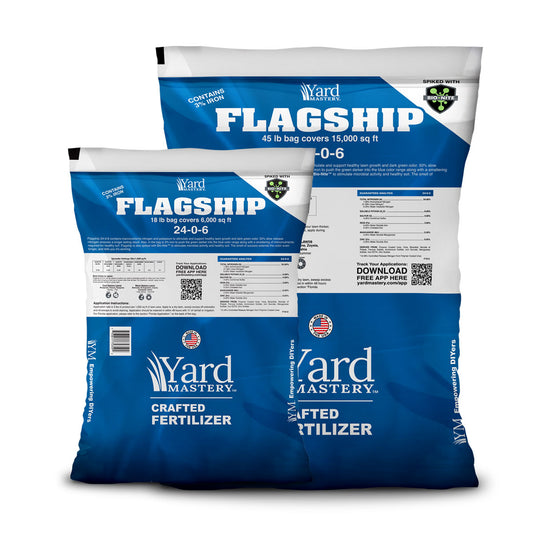
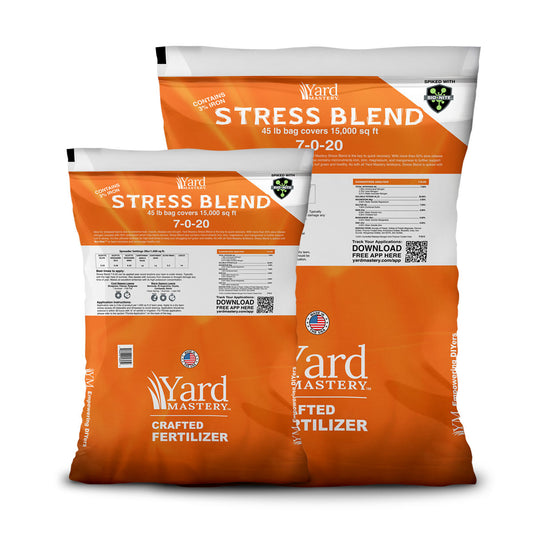
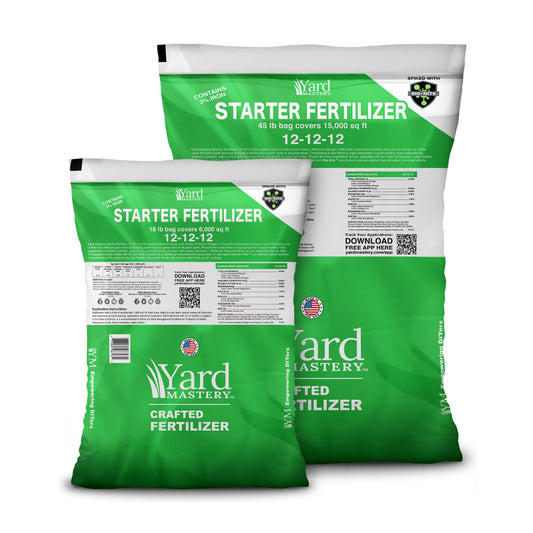
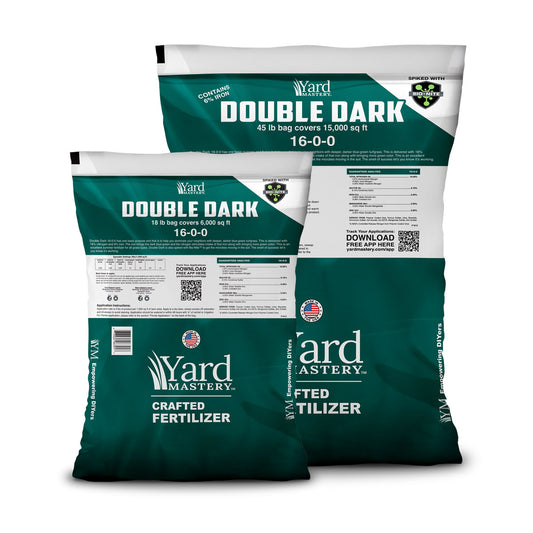
A lighter application — roughly half your normal rate — keeps nutrients available without pushing excessive top growth that would demand more water. Keep your program in place, dial back the rate, and the lawn will be primed to bounce back the moment conditions improve.
How Moisture Max Helps Your Lawn Survive Drought
One of the most effective tools in a drought management program is a wetting agent — and Moisture Max Liquid is the product we recommend at Yard Mastery for this purpose.
Here is what a wetting agent does at the soil level during drought:
Improves Water Penetration
Dry soil — especially sandy or compacted soil common in the Deep South — becomes hydrophobic. Water applied to hydrophobic soil sheets off the surface rather than penetrating to the root zone, which means you lose a significant percentage of every irrigation cycle to runoff. Moisture Max reduces the surface tension between water and soil particles, allowing water to spread more evenly and penetrate more deeply. The water you put down actually gets where the roots are.
Reduces Evaporation
Moisture Max helps the soil hold onto the water it receives by slowing the rate at which moisture evaporates from the top few inches of the soil profile. During hot, dry, sunny conditions, this retention effect extends the effective benefit of each watering by hours.
Captures Morning Dew
One of the subtler benefits of a wetting agent: it makes grass blades more slick, which causes morning dew to flow down the blade and into the soil rather than sitting on the leaf surface and evaporating once temperatures rise. In a dry climate, capturing dew daily adds up to a meaningful amount of free water over the course of a week.
Apply Moisture Max Liquid in the days leading up to your allowed watering day so it's already working in the soil when you irrigate. If you prefer a granular application, Moisture Max Granular delivers the same wetting agent technology in a broadcast-friendly format — ideal for larger lawns or homeowners who prefer a spreader over a sprayer.
Frequently Asked Questions
How often should I water St. Augustine grass during a drought?
St. Augustine needs about 1 to 1.5 inches of water per week. Under watering restrictions, concentrate that amount on your allowed watering day — target 1 inch at the start of your window and an additional 0.5 inches near the end if your schedule allows. Deep, infrequent watering is better than shallow, frequent cycles because it encourages deeper root growth.
Should I fertilize my lawn during a drought?
Yes, at a reduced rate. Warm-season grasses continue absorbing nutrients even under drought stress. Stopping entirely depletes nutrient reserves and slows recovery. Apply at roughly half your normal nitrogen rate to keep the lawn supported without demanding more top growth than the available water can sustain.
Can I water my lawn at night during watering restrictions?
During normal conditions, morning watering is preferred. During drought and restrictions, timing matters far less than getting the water down. If your allowed window includes evening or nighttime hours, use them. Occasional late-day watering will not cause chronic fungal issues.
What does a wetting agent do for a lawn in drought?
A wetting agent like Moisture Max reduces soil surface tension so water penetrates more deeply instead of sheeting off, slows evaporation from the root zone, and causes morning dew to flow into the soil rather than evaporating off the grass blades. It effectively extends the benefit of every irrigation application.
How do I know if my lawn is getting enough water during restrictions?
Watch for these three signs of drought stress: blue-gray tint to the grass color, leaf blades rolling inward, and footprints that don't spring back. Run the tuna can test to know exactly how much water each zone delivers per minute so you can hit your full 1 to 1.5 inch weekly target on your allowed day.
Will my warm-season grass recover after drought?
Yes. St. Augustine, Zoysia, and Bahia all recover well once regular rainfall or irrigation returns. Lawns that were maintained throughout the drought — fertilized at a reduced rate and treated with a wetting agent — recover noticeably faster than those that were neglected. Stored nutrients allow the grass to push new growth immediately when water becomes available again.
What is a test-and-tune, and can I use it during watering restrictions?
A test-and-tune is a manual inspection of your irrigation system to adjust heads, check coverage, and repair broken nozzles. Most watering restriction ordinances allow homeowners to run their irrigation system for test-and-tune purposes at any time, provided the homeowner is present. Check your local ordinance for the specific language. Running a genuine test-and-tune mid-week is a legal way to improve your system while getting supplemental water on the lawn.
Products Referenced in This Guide
- Moisture Max Liquid — Liquid wetting agent for improving water penetration and retention in warm-season lawns.
- Moisture Max Granular — Granular wetting agent for broadcast application on larger lawns.