
Peptides in Lawn Fertilizer: What They Are, How They Work, and Why They Matter for Your Grass
The same concept that's transforming human health and fitness is already at work in your lawn care products. Here's how plant peptides — also called protein hydrolysates — help your grass handle stress, grow stronger roots, and recover faster.
What's In This Guide
- What Are Peptides in Lawn Fertilizer?
- How Peptides Work Inside Your Grass Plant
- Three Types of Plant Peptides You Should Know
- Peptides vs. Bio-Stimulants: What's the Difference?
- The Yard Mastery Natural Nutrient Fertilizer Line
- What's Actually in the Bag: A Label Breakdown
- Natural Fertilizers vs. Flagship and Stress Blend
- Who Should Use Natural Fertilizers?
- How to Start Using Natural Fertilizers This Season
- Frequently Asked Questions
What Are Peptides in Lawn Fertilizer?
If you've been paying attention to the health and fitness world, you've probably heard the word "peptides" a lot lately. In human health, peptides are short chains of amino acids that can influence everything from recovery to metabolism. It turns out, plants have their own version of this — and it's already inside the fertilizer you may be spreading on your lawn.
In lawn care, peptides are more commonly referred to as protein hydrolysates. They're short chains of amino acids — usually between 2 and 100 amino acids long — that function as chemical messengers inside grass plants. Think of them as tiny protein fragments: smaller than a full protein, but larger than a single amino acid. They sit right in the sweet spot where they can bind to receptors on cell surfaces and trigger specific biological responses.
In nature, grass plants produce these peptides on their own. But when you apply a fertilizer that contains protein hydrolysates, you're supplementing the plant's natural supply — giving it additional signaling molecules that help it regulate growth, development, and defense more efficiently.
Due to state-level regulations around labeling, you'll sometimes see peptides referred to as "bio-stimulants" on fertilizer bags and product descriptions. Same concept, different name depending on who's doing the regulating.
How Peptides Work Inside Your Grass Plant
Understanding how peptides function in plants doesn't require a biology degree, but it does help to know the basics — especially when you're deciding what products to put on your lawn.
Many plant peptides function as signaling molecules. When they bind to receptors on a cell's surface, they trigger a chain reaction inside the cell that activates specific genes. Those genes then produce proteins that help the plant do things like grow new roots, repair damaged tissue, or mount a defense against environmental stress.
Here's a simple way to think about it. Imagine your grass plant is a factory. It has all the equipment and blueprints it needs to produce quality turf. But sometimes the factory floor gets a little chaotic — heat waves, drought, foot traffic, disease pressure — and the workers need clearer signals about what to prioritize. Peptides are those signals. They tell the plant's cellular machinery exactly what to ramp up and what to dial back depending on conditions.
The result is a grass plant that responds to stress faster and more effectively than it would on its own. Not by adding something artificial, but by enhancing the plant's existing biological processes. This is a fundamentally different approach than traditional synthetic fertilizers, which focus primarily on delivering raw nutrients (nitrogen, phosphorus, potassium) for the plant to consume.
Three Types of Plant Peptides You Should Know
Plant scientists have identified several families of peptides that play specific roles in how grass grows and responds to its environment. Three of the most well-studied are CLE, RALF, and CEP peptides. Here's what each one does and why it matters for your lawn:
CLE Peptides — Managing Growth
CLE peptides (short for CLAVATA3/EMBRYO SURROUNDING REGION-related) manage stem cell activity in the growing tips of both roots and shoots. In practical terms, they help regulate how and where your grass grows. When your lawn is actively producing new tillers, runners, or root mass, CLE peptides are part of the coordination system making sure that growth is balanced and healthy — not just fast, but structurally sound.
RALF Peptides — Stress Response
RALF peptides (Rapid Alkalinization Factor) are involved in how plants respond to stress. When your grass encounters heat, high salt concentrations in the soil, pathogens, or physical damage, RALF peptides help activate the genes responsible for protection and repair. Think of them as your lawn's internal emergency response system — they don't prevent stress from happening, but they help the plant deal with it faster and more effectively when it does.
CEP Peptides — Nutrient Sensing and Drought Tolerance
CEP peptides (C-TERMINALLY ENCODED PEPTIDE) play a critical role in how grass senses nutrient availability in the soil and manages its water use. During drought conditions, CEP peptides help the plant adjust its root growth patterns to seek out moisture more efficiently. They also help the plant optimize how it uses the nutrients already available in the soil — which means you can potentially get more mileage out of every fertilizer application.
Peptides vs. Bio-Stimulants: What's the Difference?
If you've been in the lawn care space for a while, you've probably heard the term "bio-stimulant" applied to products like humic acid, sea kelp extract, and amino acid supplements. So where do peptides fit in?
The short answer: peptides are a type of bio-stimulant. "Bio-stimulant" is a broad category that includes any substance that enhances plant processes without being a traditional fertilizer, pesticide, or hormone. Peptides (protein hydrolysates) fall under that umbrella alongside other bio-stimulants like humic acid, fulvic acid, and kelp extract.
What makes peptides unique within the bio-stimulant family is how precisely they work. Unlike humic acid, which primarily improves soil structure and nutrient availability (working from the outside in), peptides work directly at the cellular level inside the plant. They're binding to specific receptors and triggering specific genetic responses. It's a more targeted mechanism — more like a key fitting into a lock than a general soil improvement.
That said, the best results come from combining these approaches. A product that delivers both traditional nutrients and bio-stimulant peptides gives your lawn raw fuel and better cellular signaling at the same time. That's exactly the philosophy behind the Yard Mastery natural nutrient fertilizer line.
The Yard Mastery Natural Nutrient Fertilizer Line
Yard Mastery released three natural nutrient fertilizers that contain plant-based protein hydrolysates (peptides) as a core ingredient. Each one is designed for a specific role in your lawn care program:
8-0-3 Soil Fit — The Soil Builder
Soil Fit was the first product in the natural line, released a couple years ago as a foundational soil amendment. With an 8-0-3 analysis, it provides a moderate amount of nitrogen along with potassium, but the real value is in its soil-building ingredients. It's your base layer — the product that improves the biological environment in your soil so that everything else you apply works better over time.
5-0-15 Life Support — The Stress Shield
Life Support is the natural line's answer to Stress Blend (7-0-20). With a 5-0-15 analysis, it's a high-potassium fertilizer designed to strengthen your grass during periods of heat, drought, and environmental pressure. The peptides in Life Support enhance the plant's natural stress response mechanisms, while the potassium supports cellular hydration and overall resilience. It's an excellent choice during summer months when your lawn is under the most pressure.
20-0-2 Derby Green — The Growth Driver
Derby Green is the natural line's counterpart to Flagship (24-0-6). With a 20-0-2 analysis, it delivers strong nitrogen for color and growth, but through a blend of natural and slowly available sources. The protein hydrolysates in Derby Green help the plant process that nitrogen more efficiently, and because much of the nitrogen is slow-release, you get a more sustained feed with less risk of burning.
All three products contain plant (wheat) protein hydrolysates, kelp extract, and are derived from natural sources including soybean meal, feather meal, and wheat flour.
What's Actually in the Bag: A Label Breakdown
One of the things that separates informed lawn care from guesswork is reading the label. Here's a breakdown of what you'll find in the Yard Mastery natural fertilizer line, using the 20-0-2 Derby Green label as an example:
[Insert Guaranteed Analysis label image for 20-0-2 Derby Green]
Guaranteed Analysis — 20-0-2 Derby Green
Total Nitrogen (N): 20.00%
13.00% Urea Nitrogen* · 3.05% Ammoniacal Nitrogen · 3.95% Water Insoluble Nitrogen
Soluble Potash (K₂O): 2.00%
Sulfur (S): 5.26% (3.93% Combined, 1.33% Free)
Derived From: Soybean Meal, Feather Meal, Wheat Flour, Ammonium Sulfate, Sulfur Coated Urea, Sulfate of Potash, Plant (Wheat) Protein Hydrolysate
*13% Slowly Available Urea Nitrogen from Sulfur Coated Urea
Nonplant Food (Active) Ingredients:
Kelp Extract: 1.24%
There are a few things worth noting here. First, look at the nitrogen sources. You've got a mix of fast-acting nitrogen (urea, ammoniacal) and slow-release nitrogen (water insoluble nitrogen from sulfur-coated urea). This is intentional. Straight organic fertilizers are notoriously slow to show results — they require heavy application rates and a lot of patience. By blending in a small amount of synthetic nitrogen alongside the natural sources, you get visible greening within days while the slower organic components continue feeding the plant over weeks.
Second, note the "Derived From" line. Soybean meal, feather meal, and wheat flour are all protein-rich natural ingredients. These are the sources of the amino acids and peptides in the product. The plant (wheat) protein hydrolysate is the specific peptide component — the signaling molecules we've been discussing throughout this article.
Third, kelp extract at 1.24% provides additional bio-stimulant activity. Kelp is rich in natural plant hormones and micronutrients that support root development and stress tolerance. It works alongside the peptides to create a more complete bio-stimulant profile.
Key Ingredient Functions
| Ingredient | What It Does |
|---|---|
| Plant (Wheat) Protein Hydrolysates | Provides amino acids that optimize plant performance and improve stress recovery cycles |
| Kelp Extract | Improves resistance to heat, cold, salt, and drought stress through natural plant hormones |
| Sulfur (S) | Promotes healthy growth and supports nitrogen utilization for optimal lawn vigor |
| Soybean Meal, Feather Meal, Wheat Flour | Natural, protein-rich sources of slow-release nitrogen |
| Sulfur Coated Urea | Slowly available synthetic nitrogen for faster visual response without heavy burn risk |
Natural Fertilizers vs. Flagship and Stress Blend: Which Is Better?
This is probably the most common question when people first discover the natural nutrient line, so let's address it directly: the natural fertilizers are not "better" than Flagship and Stress Blend — they're different.
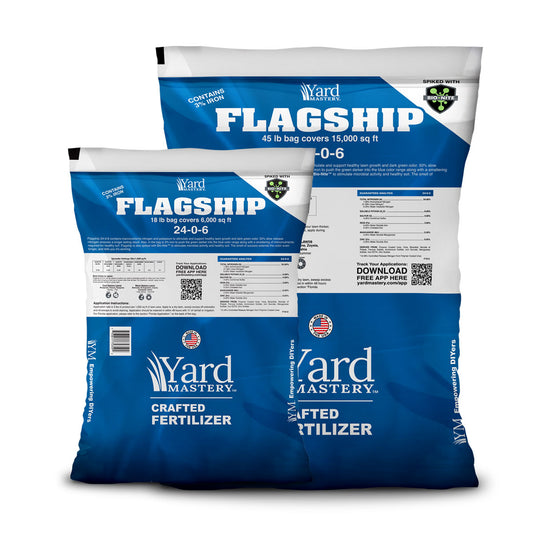
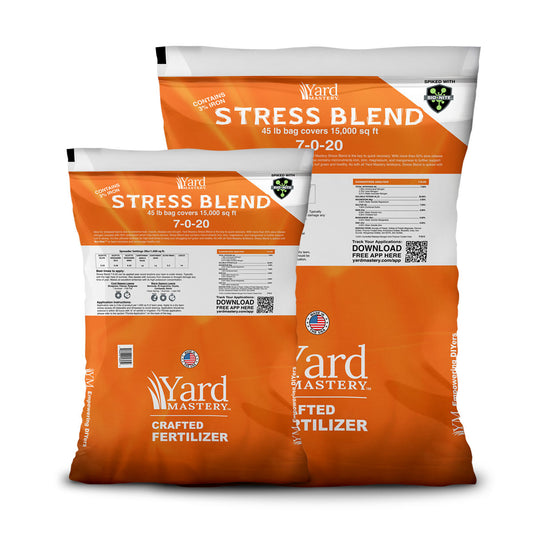
Yard Mastery's core fertilizer line — 24-0-6 Flagship, 7-0-20 Stress Blend, 17-7-6 Freedom, 16-0-0 Double Dark, and 12-12-12 Starter Fertilizer — are hybrid formulations that contain macronutrients, micronutrients, and the Bio-Nite bio-stimulant in one blend. They are designed to deliver strong, reliable results and are the products recommended on the general program inside the Yard Mastery app. They work. Millions of lawns prove it every season.
The natural nutrient line — Soil Fit, Life Support, and Derby Green — takes a different approach by using predominantly natural-source ingredients and adding plant peptides for enhanced biological signaling. The tradeoff is that natural fertilizers tend to release nutrients more slowly and require the soil biology to be active for full effectiveness.
Here's how they map to each other:
| Core Line | Natural Line | Primary Use |
|---|---|---|
| 24-0-6 Flagship | 20-0-2 Derby Green | Growth, color, and nitrogen delivery (spring/fall) |
| 7-0-20 Stress Blend | 5-0-15 Life Support | Stress protection and potassium (summer) |
| — | 8-0-3 Soil Fit | Foundational soil building (any time) |
The best part: they're priced the same as the core line. Natural and organic fertilizers are typically more expensive, but Yard Mastery has worked to keep the cost equivalent so you can try natural without paying a premium.
Who Should Use Natural Fertilizers?
The natural nutrient line is a great fit for several types of homeowners:
If You Prefer a More Natural Approach
Some homeowners simply prefer to minimize synthetic inputs on their property. If that's you, the NATTY program in the Yard Mastery app gives you a complete, season-long plan built entirely around the natural line. It takes the guesswork out of which product to use and when.
If You're New and Worried About Burning Your Lawn
This is a big one. Fear of burning the lawn is one of the most common barriers for beginners. While none of the Yard Mastery fertilizers — natural or synthetic — will burn your lawn at the recommended rates, mistakes happen. You might overlap passes with your spreader or accidentally dump a pile while loading. The natural fertilizers are predominantly slow-release nutrients, which means they have significantly less burn potential even if you make an application error. If the fear of fertilizer burn has kept you from spreading with confidence, the natural line removes that worry.
If You Want to Mix and Match
You don't have to go 100% natural to benefit from peptides. A practical approach for many homeowners is to substitute the natural version for one or two applications per season. When the Yard Mastery app recommends Flagship, try Derby Green for that application instead and see how your lawn responds. When it calls for Stress Blend during a heat wave, swap in Life Support. This gives you a direct comparison on your own turf with your own soil conditions — the only data that truly matters.
Try the Natural Nutrient Line
Same price as the core line. Peptide-enhanced. Low burn risk.
Shop Soil Fit Shop Derby Green Shop Life SupportHow to Start Using Natural Fertilizers This Season
Getting started is straightforward, especially if you're already using the Yard Mastery app:
Option 1: Go Full Natural. Open the Yard Mastery app, go to Lawn Settings, and toggle on the NATTY program. The app will build your entire season around Soil Fit, Derby Green, and Life Support, timed to soil temperatures in your zip code. Follow the plan and see how your lawn responds over a full season.
Option 2: Substitute a Few Applications. Keep your current program and swap in a natural product for one or two of your fertilizer applications. A good starting point is to use Derby Green for your second spring application (instead of Flagship) and Life Support for your first summer application (instead of Stress Blend). This gives you a side-by-side comparison within the same season.
Option 3: Use Soil Fit as an Add-On. If you don't want to change your fertilizer program at all, add Soil Fit as a standalone soil-building application between your regular fertilizer apps. It works alongside any program to improve soil biology and structure over time.
Regardless of which approach you choose, the application process is the same as any granular fertilizer: load your spreader, set the rate per the bag label, and push. The natural fertilizers are applied with the same equipment and techniques you're already using.
Frequently Asked Questions
What are protein hydrolysates in lawn fertilizer?
Protein hydrolysates are short chains of amino acids (peptides) derived from natural protein sources like wheat, soybean, or feather meal. In lawn fertilizer, they function as signaling molecules that bind to receptors in grass plant cells and trigger biological responses related to growth, stress tolerance, and nutrient uptake. They help your grass use nutrients more efficiently and recover from heat, drought, and other environmental stress more quickly.
Are natural lawn fertilizers better than synthetic?
Neither is inherently better — they're different tools for different preferences. Synthetic fertilizers deliver nutrients quickly and produce fast visual results. Natural fertilizers release nutrients more slowly, work with soil biology, and contain bio-stimulant peptides that enhance the plant's own processes. The Yard Mastery natural line bridges the gap by including a small amount of synthetic nitrogen alongside natural ingredients, giving you both a quick visual response and long-term biological benefits.
Will natural fertilizer burn my lawn?
Natural fertilizers have a much lower burn risk than high-nitrogen synthetic fertilizers because most of their nutrient content is slow-release. Under normal application at the recommended rates, burn is extremely unlikely. Even if you accidentally overlap passes with your spreader, the slow-release nature of the ingredients provides a significant safety margin. This makes natural fertilizers an excellent choice for beginners who are still building confidence with their spreader technique.
What is a bio-stimulant for lawns?
A bio-stimulant is any substance that enhances plant biological processes without being a traditional fertilizer, pesticide, or plant hormone. Common lawn bio-stimulants include humic acid, fulvic acid, sea kelp extract, and protein hydrolysates (peptides). They improve soil biology, enhance nutrient uptake, support root development, and help grass tolerate environmental stress. Many Yard Mastery fertilizers contain the bio-stimulant Bio-Nite, and the natural nutrient line adds plant peptides for additional biological signaling.
Can I mix natural and synthetic fertilizers in the same lawn program?
Yes. You can substitute natural fertilizers for one or two applications in your existing program without any issues. For example, use 20-0-2 Derby Green in place of Flagship for one spring application, or 5-0-15 Life Support in place of Stress Blend during summer. This lets you compare results on your own lawn. The Yard Mastery app's NATTY program also provides a full-season natural plan if you want to go all-in.
Are natural fertilizers more expensive?
Typically yes — in the broader market, natural and organic fertilizers cost significantly more than synthetic options. However, the Yard Mastery natural nutrient line (Soil Fit, Derby Green, and Life Support) is priced the same as the core synthetic line. This was an intentional decision to remove the cost barrier so homeowners can try natural without paying a premium.
The Bottom Line
Plant peptides aren't a gimmick or a marketing buzzword. They're well-studied signaling molecules that help your grass coordinate growth, manage stress, and use nutrients more efficiently. Including them in your lawn fertilizer is a science-backed way to get more out of every application.
Whether you go fully natural with the NATTY program, substitute a couple of applications, or just add Soil Fit as a soil-building layer — you're giving your lawn an advantage that goes beyond raw nutrients. You're enhancing the biological systems that make your grass resilient, and that pays dividends all season long.
I'll see you in the lawn.