
Winterizer Fertilizer: When to Apply It, What to Use, and Who Should Skip It
The term "winterizer" sparks a lot of interest during the fall. You've worked hard on your lawn all season. Some of you had success, some not so much, and some of you had both ups and downs.
A winterizer is a way to get ahead on the next season, and today I'm giving you my thoughts on it: what a winterizer fertilizer is, when to apply it, exactly what I'd put down, and why warm-season lawns should skip it.
Some background: I started in lawn care in 1998, working for TruGreen on the South Side of Chicago and in NW Indiana. In 2009, I became operations manager for the Merrillville, IN branch, and that's when I learned how much difference a winterizer can make, not only for the following season but over the winter as well. I saw lawns with and without a winterizer, and in my experience the winterized lawns were noticeably greener the following spring.
Key takeaways: Winterizer fertilizer
- Who: Cool-season lawns only (Kentucky bluegrass, perennial ryegrass, tall fescue).
- When: Right around your final mowing of the season, after the grass has pretty much stopped growing and before the ground freezes.
- What: 24-0-6 Flagship at 3 lbs per 1,000 sq ft, or 40-0-0 Pre-Ban at 5 lbs per 1,000 sq ft (2 lbs of nitrogen per 1,000 sq ft).
- Warm-season lawns: No winterizer. Use Stress Blend only while you're still mowing every 8–10 days, Compaction Cure any time the soil isn't frozen, and Dimension pre-emergent around the time you stop mowing.
- Central/South Florida & South Texas: If you're still mowing, you can still be throwing.
What Is a Winterizer Fertilizer?
A winterizer is your last fertilizer application of the year. First off, winterizers are NOT for warm-season lawns. St. Augustine, Bermuda, zoysia, centipede, and bahia are warm-season grasses, and they don't benefit from a winterizer application. More on what we do for them below.
Cool-season grasses (KBG, rye, tall fescue), on the other hand, can benefit a lot from a winterizer, and the key to success is nitrogen content. Nitrogen drives the bus all season long, including with your winterizer.
When to Apply Winterizer: Right Around Your Final Mowing
The idea is to put down a final application for the season right around the time of your final mowing. It provides some benefit at the end of the year, especially if you get what's known as an "Indian Summer," a late-season warm spell. But its real job is to help the lawn come out of dormancy and green up sooner the following spring as it wakes up from its winter slumber.
That's why you put it down after your final mowing of the season.
When the grass is no longer being mowed, it has pretty much shut off for the season (key phrase: pretty much shut off). The fertilizer sits in the thatch layer over the winter, under the snow. When the snow melts in spring, it waters the fertilizer into the soil, feeding your awakening grass right away.
Think of it like waking up to breakfast in bed! Nothing better than that!
Why I Say "Pretty Much" Shut Off (and the Winter Domination Line)
Here's the thing: I say "pretty much shut off" because until the ground actually freezes, grass roots are still taking in a small amount of nutrients. Once you get your first snow, it can take a week or more for the ground to freeze. During that time the fertilizer can keep the lawn a shade greener than the fully dormant, brown, crispy lawns around it.
Every single year I get reports from DIYers who applied a winterizer, got snow, and then saw a January or February warm-up melt it off. The winterized lawn was still a bit green, and a domination line showed up. I love getting these messages because a domination line is a welcome sight in the middle of winter. That small win doesn't mean anything in the grand scheme of lawn health. It's just fun to notice.
The Real Payoff: Early Spring Green-Up
Again, the real payoff of a winterizer is the early spring green-up it provides. Think about the cool-season growth pattern: cool-season lawns take off in spring, slump in summer, and take off again in fall. The winterizer goes down at the end of fall. The following spring, when the lawn is ready to launch into green vigor again, melting snow waters it in, and it's off to the races.
Best Winterizer Fertilizer for Cool-Season Lawns
Option 1: 24-0-6 Flagship

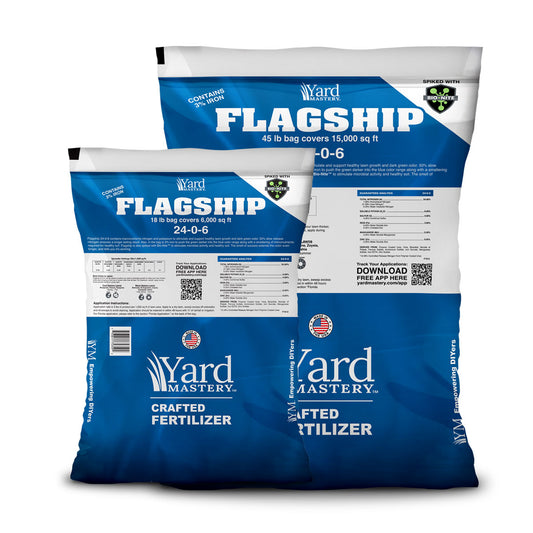
My primary choice is 24-0-6 Flagship. At the application rate of 3 lbs per 1,000 sq ft (spreader settings are on the bag), it puts down a nice amount of nitrogen that the lawn will use in early spring. It also has some potassium, which is great for stress (winter is stressful), plus 3% iron and other micronutrients that help early on.
Need a refresher on spreader settings and calibration? Read How To Apply Granular Fertilizer.
Option 2: 40-0-0 Pre-Ban

A second option, and the one I like even more, is 40-0-0 Pre-Ban. It's a purely urea nitrogen product, and 100% of the nitrogen is controlled-release. One challenge with a winterizer like Flagship is that some nitrogen can leach out over the winter. It's not enough to hurt your results the following spring, but some loss still occurs. Pre-Ban's coated nitrogen is designed to release slowly as temperatures warm instead of all at once, so more of what you put down should be there when the lawn wakes up.
The other fun thing about Pre-Ban is how much nitrogen you put down. At 5 lbs of product per 1,000 sq ft, that's a full 2 lbs of nitrogen per 1,000 sq ft. It releases over the first 3–4 months of the season, giving you a sustained, slow green that builds and builds. Think of it as a foundation for everything else. In spring, you'll still apply your regular fertilizers as recommended in the Yard Mastery app. Using Pre-Ban as your winterizer just adds a slow trickle of nitrogen in the background.
Shop: 24-0-6 Flagship · 40-0-0 Pre-Ban · Cool-Season Winterizer Value Pack · Browse all Granular Fertilizers
Winterizer vs. the Fall Nitrogen Blitz
The Fall Nitrogen Blitz is an optional color play while the lawn is still actively growing in fall. The winterizer is the final application around your last mow. It's aimed at next spring. For the full cool-season fall program, see Cool Season Fall Lawn Care Without Seeding.
Warm-Season Lawns: No Winterizer (Here's What to Do Instead)
Trust me, guys, I wish we could apply winterizers to our lawns, but they just won't do anything. That's because our lawns wake up EXTREMELY slowly in spring. Many warm-season lawns don't really start to green up until early May. A late-season fertilizer application would have no effect, so don't waste your money.
When you see "winterizer" on a warm-season product, it means putting the lawn to bed, not pushing it. That's how our Warm-Season Winterizer Pack is built.
Stress Blend, Only While You're Still Mowing

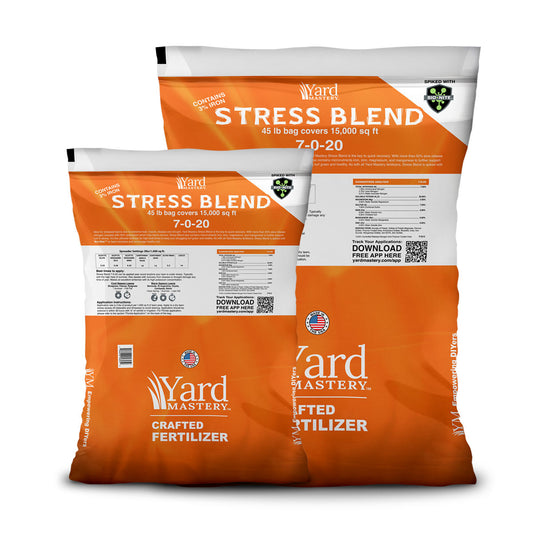
You can keep applying 7-0-20 Stress Blend to your warm-season lawn as long as you're still mowing at least every 8–10 days or so. Once you're mowing less often than that, stop fertilizing. Stress Blend is a good fit as the lawn slows down because it has a small amount of nitrogen (7%) but is higher in potassium and magnesium, which help put the lawn to bed through the stresses of winter dormancy. Warm-season grasses usually don't have snow cover, and those added electrolytes can help keep the lawn from drying out (desiccating) when it's left exposed in cold, windy conditions.
Compaction Cure, Any Time the Soil Isn't Frozen

I also highly recommend continuing to apply Compaction Cure to your warm-season lawn as late into the season as you like (6–12 oz per 1,000 sq ft). It helps drive water penetration and break up hydrophobic conditions that can cause problems down the road. Feel free to apply it any time the ground isn't frozen.
Your Final Warm-Season Application Is Pre-Emergent
We're not applying fertilizer late in the season on warm-season grasses, but we are still applying pre-emergent. The Yard Mastery app recommends two fall pre-emergent applications. The first is Prodiamine (also available as Prodiamine WDG Drop-N-Go packs), which the app is recommending now for most of you. The second is Dimension (dithiopyr), recommended about 30–40 days later.
Dimension helps keep Poa annua and other weeds from invading during winter. We don't get snow cover, and in many cases our soil doesn't freeze, leaving openings for weeds adapted to cold temperatures. Annual bluegrass (Poa annua) is the biggest culprit. Dimension can reduce or even eliminate those problems. So instead of fertilizer at the end of the season, apply Dimension right around the time you stop mowing for the season.

For more on fall pre-emergent timing and products, see Fall Pre-Emergent: Which Pre-Emergent Is Best for Fall? and Warm Season Fall Lawn Care.
Shop: 7-0-20 Stress Blend · Compaction Cure · Dimension · Prodiamine Granular · Browse all Pre-Emergents
Florida and South Texas: If You're Still Mowing, You Can Still Be Throwing
For Central and South Florida and South Texas, some of this doesn't apply to you! If your lawn does NOT go dormant and you're mowing all winter, even if it's only every 14 days, you can keep applying 7-0-20 Stress Blend, or in South Florida, 24-0-6 Flagship. I fertilize my lawn in Bradenton year-round. I always say, "If you're still mowing, then you can still be throwing!"

More for Florida lawns: Winter Lawn Tips for Florida. Always follow your local fertilizer ordinances.
Let the Yard Mastery App Time It for You
Not sure what your lawn needs and when? Your personalized plan, including pre-emergent timing and your fertilizer schedule, is in the free Yard Mastery app.
Winterizer Fertilizer FAQ
What is a winterizer fertilizer?
A winterizer is the last fertilizer application of the year on a cool-season lawn. It's mostly nitrogen, applied around the final mowing, so the lawn has food waiting when it wakes up in spring.
When should I apply winterizer fertilizer?
Right around your final mowing of the season, once the grass has pretty much stopped growing but before the ground freezes.
What is the best winterizer fertilizer for cool-season lawns?
For Kentucky bluegrass, ryegrass, and tall fescue, use 24-0-6 Flagship at 3 lbs per 1,000 sq ft or 40-0-0 Pre-Ban at 5 lbs per 1,000 sq ft (2 lbs of nitrogen per 1,000 sq ft). Pre-Ban's nitrogen is 100% controlled-release, so it feeds slowly over roughly the first 3–4 months of the year.
Should I put a winterizer on Bermuda, St. Augustine, centipede, zoysia or bahia?
No. Warm-season lawns green up slowly in spring, often not until around May, so a late-season fertilizer won't do anything. Keep using Stress Blend only while you're still mowing every 8–10 days, use Compaction Cure any time the soil isn't frozen, and apply Dimension pre-emergent around the time you stop mowing.
Can I still apply a winterizer after the first snow?
Roots keep taking up a small amount of nutrients until the ground actually freezes, and that can take a week or more after the first snow. Aim to get your winterizer down before the ground freezes.
Does a winterizer replace my spring fertilizer?
No. In spring, you'll still apply your regular fertilizers as recommended in the Yard Mastery app. The winterizer just gives you a head start on spring green-up.
I'll see you in the lawn.
AL
P.S. Once your last mow is done, it's Christmas light season. The 2700K warm white C9 bulbs are available now, along with the rest of our Christmas lights. I'll see you on the roof!
Always read and follow product label directions.